Watering Can SVG: A Designer’s Real-World Embroidery Review
First Impression: Charm Without Clutter
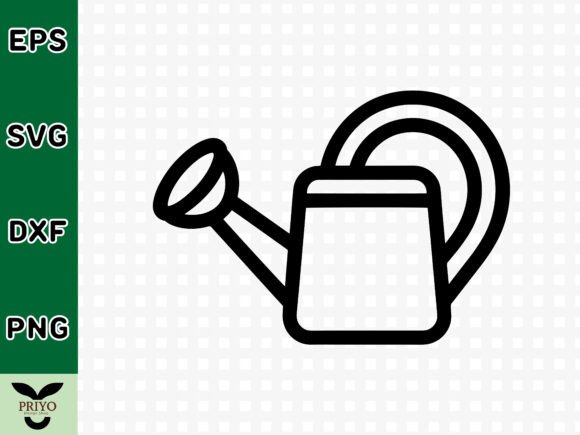
When I opened the Watering Can SVG file, what struck me first wasn’t technical precision—it was mood. This isn’t a fussy, over-rendered botanical illustration. It’s clean, slightly nostalgic, and quietly confident: a classic watering can with gentle curves, an open spout, and just enough detail to read clearly at 3–4 inches tall. No tiny rivets, no excessive shading—just shape, balance, and intention. That matters deeply when translating a digital graphic into a machine embroidery design. For embroidery designers and craft business owners, that simplicity is a green light—not because it’s easy, but because it’s *forgiving*. It’ll hold up on a linen tea towel, pop on a cotton apron, and still feel intentional on a baby onesie.
Where It Shines: Real Projects, Real Customers
I tested Watering Can SVG as the centerpiece for a custom embroidered tote bag—linen-cotton blend, medium weight, destined for a local plant shop’s gift line. The result? Instant recognition and warmth. Customers paused mid-browse. “Oh—I *get* that,” one said, pointing to the can. That’s the quiet power of this design: it communicates care, growth, and domestic joy without saying a word. It works equally well for sweatshirt embroidery (paired with soft pastel thread), nursery decor (as a single motif on a pillow cover), or even as a subtle embroidered patch on a denim jacket. As an applique design, its open silhouette gives room for fabric contrast—think sage green felt against cream twill. And for Etsy sellers offering personalized gifts, it layers beautifully with monogrammed initials or a small date in running stitch beneath.
What Holds Up Under Stitch—and What Needs Thought
The Watering Can SVG’s outline is generous and smooth—no sharp interior angles that trap thread or cause puckering on stretchy fabric. That makes it reliable for t-shirts and baby embroidery, especially when paired with a lightweight cutaway stabilizer. Fill stitch areas are modest, not dense—so it won’t overwhelm thin fabrics like chambray or voile. But here’s where attention matters: the handle curve and spout tip are narrow. On dark fabric, those fine lines may soften unless you boost stitch density slightly—or switch to satin stitch for crisp definition. And while it reads beautifully on flat surfaces (tote bags, pillow covers), avoid placing it across high-curve zones like cap fronts unless you’re willing to split the design or adjust tension manually.
Not Just Cute—Commercially Smart
For small shop owners and creative entrepreneurs, Watering Can SVG delivers more than visual appeal—it builds trust. Its balanced proportions and clear silhouette signal craftsmanship, not clipart. When used on boutique merchandise (say, a set of embroidered kitchen towels), it elevates perceived value. Buyers don’t see “SVG download”—they see handmade product, thoughtful curation, and seasonal relevance (spring launches, garden-themed weddings, Mother’s Day bundles). As a digital embroidery file, it also scales cleanly for printable mockups—essential for Etsy listings where presentation drives clicks. Just remember: if you’re selling finished embroidered items commercially, confirm the license permits resale of physical products. If you’re reselling the file itself, verify it’s cleared for commercial embroidery use—not just personal projects.
Practical Notes Every Embroidery Designer Should Run Through
- Test first—always run a sample on scrap fabric matching your final project’s weight and texture.
- Check thread color contrast—this design relies on clarity, not saturation. Light thread on light fabric can vanish; try tone-on-tone or add a subtle outline stitch.
- Review stitch density—especially in curved areas. Too sparse = fragile edges; too dense = stiff, bulky results on soft garments.
- Confirm hoop size fit—its natural width sits comfortably in a 4x4 hoop, but if you’re scaling up for a blanket or down for a cap, recheck spacing and detail retention.
- Inspect small details—zoom in on the spout opening and handle joint. If converting to embroidery format, ensure no vector points collapse into unreadable clusters.
- Mock it in black and white—this reveals contrast issues faster than color previews. Does the shape still read?
- Use proper stabilizer—lightweight tear-away for stable cottons; cutaway for knits or textured weaves like burlap or terry cloth.
- Verify dual-use readiness—does it work equally well for personal keepsakes *and* your craft business’s branded line? Watering Can SVG does—but only if you’ve confirmed licensing terms.
Final Thought: A Design That Grows With You
This isn’t just another Crafts category graphic. Watering Can SVG has the quiet versatility of a well-designed typeface—it adapts without shouting. It feels at home on a holiday embroidery sampler stitched by a hobbyist, yet polished enough for a small shop’s wholesale catalog. It doesn’t demand attention; it earns it through consistency, clarity, and charm. Whether you’re an apparel decorator building a spring collection, an Etsy seller refreshing your digital embroidery file shop, or a maker stitching personalized gifts for friends, this design respects your time, your machine, and your customer’s eye. Just remember: great embroidery starts before the needle drops. So test it. Tweak it. Trust your judgment—and let Watering Can SVG do what it does best: grow meaning, one stitch at a time.